Financial ServicesTrendAdoption ResearchData story
Never the filing cabinet: almost two-thirds of PwC and ULI real estate survey respondents are deploying AI, but the interviews keep coming back to people.
PwC and ULI's Emerging Trends in Real Estate 2027 finds almost two-thirds of survey respondents actively deploying AI, and an even larger share ranking it the most disruptive force through 2029. The report still sees judgment, relationships and service as an important source of value.

Key figures
- ~2/3 Survey respondents actively deploying AI. Most of those report gains · self-reported. (PwC / ULI, Emerging Trends in Real Estate 2027)
- #1 Disruptive force through 2029, as respondents rank it. Ahead of construction costs, geopolitics and grid limits · no percentage given. (PwC / ULI, Emerging Trends in Real Estate 2027)
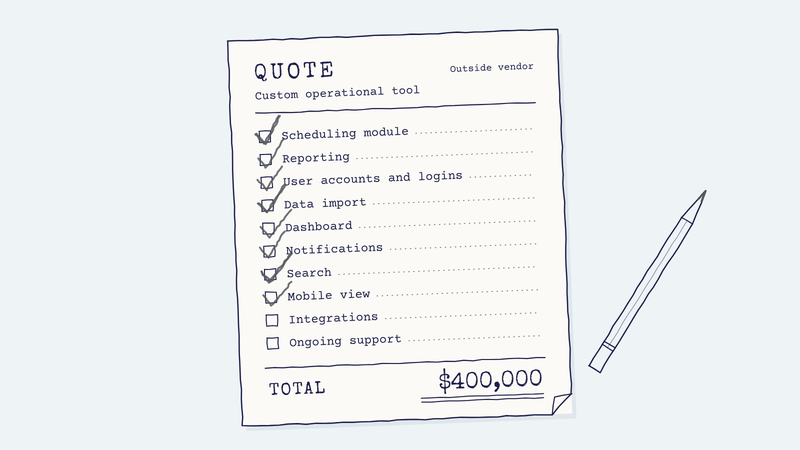
- $400,000 Outside vendor's quote for a custom operational tool. Economy extended-stay operator · a quote, not spend. (PwC / ULI interviews)
- ~80% Of that tool built by a team member with no formal coding background. Internal cost: "a fraction" · no figure given. (PwC / ULI interviews)
Survey shares and anonymous interview accounts from PwC and the Urban Land Institute. None is a measured outcome. The chapter gives no survey size, no percentage for the disruption ranking and no internal build cost.
In a real estate report for 2027, several firms describe "building custom applications using AI-assisted coding that replace vendor software at significantly lower cost." One example: an economy extended-stay operator reports that a team member with no formal coding background produced roughly 80 percent of a custom operational tool. An outside vendor had quoted $400,000 for it. The internal build cost "a fraction of that amount," and the report calls it "debatable" whether that is "a scalable model or an exceptional case."
The story comes from Emerging Trends in Real Estate 2027, from PwC and the Urban Land Institute, in a chapter called "AI and the Human Premium." Almost two-thirds of the report's survey respondents are now actively deploying AI, it says, "and most of those reporting productivity gains." An even larger share rank AI as the single most disruptive force facing the industry through 2029, ahead of construction costs, geopolitical instability, and energy and power grid constraints. The report gives no percentage for that ranking.
Using it is not the same as doing it well. "Everybody is talking about AI, but very few people are actually doing it well. It is painful and slow and expensive," the CEO of a national extended-stay operator says in the report. PwC and ULI say that line "may be the most representative observation in this year's interviews."
The report is careful with its best story. Firms reporting results like the $400,000 one "tend to have strong data infrastructure and executive commitment to the process," it says. Building in-house also carries ongoing costs in maintenance, updates, and technical support "that are not always apparent at launch." What the internal tool cost to build, and what it costs to keep running, is not in the report.
Every office is full of paper, screens and cabinets, and the most interesting thing in it is never the filing cabinet. It's whoever is sitting there. The report turns to people too. "Hoteling did not work. Hot desking did not work," a senior leasing executive at a Manhattan office REIT says in the report. "What works is giving people a reason to come in that they cannot replicate at home. And that reason is almost always other people."
That is what the report calls the human premium: judgment, relationships and service. As AI increasingly supports analytical and operational tasks, it says, "the ability to exercise judgment, build relationships, and deliver differentiated service and experiences remains an important source of value across the industry." It is just as plain about the limits. The link between service investments and financial performance "is difficult to isolate precisely," and preferences for human versus automated interaction vary by customer, activity and property type.
What would make this a stronger Index signal: the survey's size and question wording from the full report, a definition of the gains respondents report, and a named firm putting numbers on a build like the $400,000 one, including what it cost and what it costs to maintain. Until then, it is a useful read on where the industry thinks value sits, not a measured result. The chapter's own last line keeps the caveat standing: executives who stay clear about the difference between implementing technology and generating measurable value "will be better positioned than those who conflate adoption with advantage."
Get new AI Value Index records in your inbox.
Subscribe