AI answers are citing pages, not just naming brands. That changes what a business has to prove.

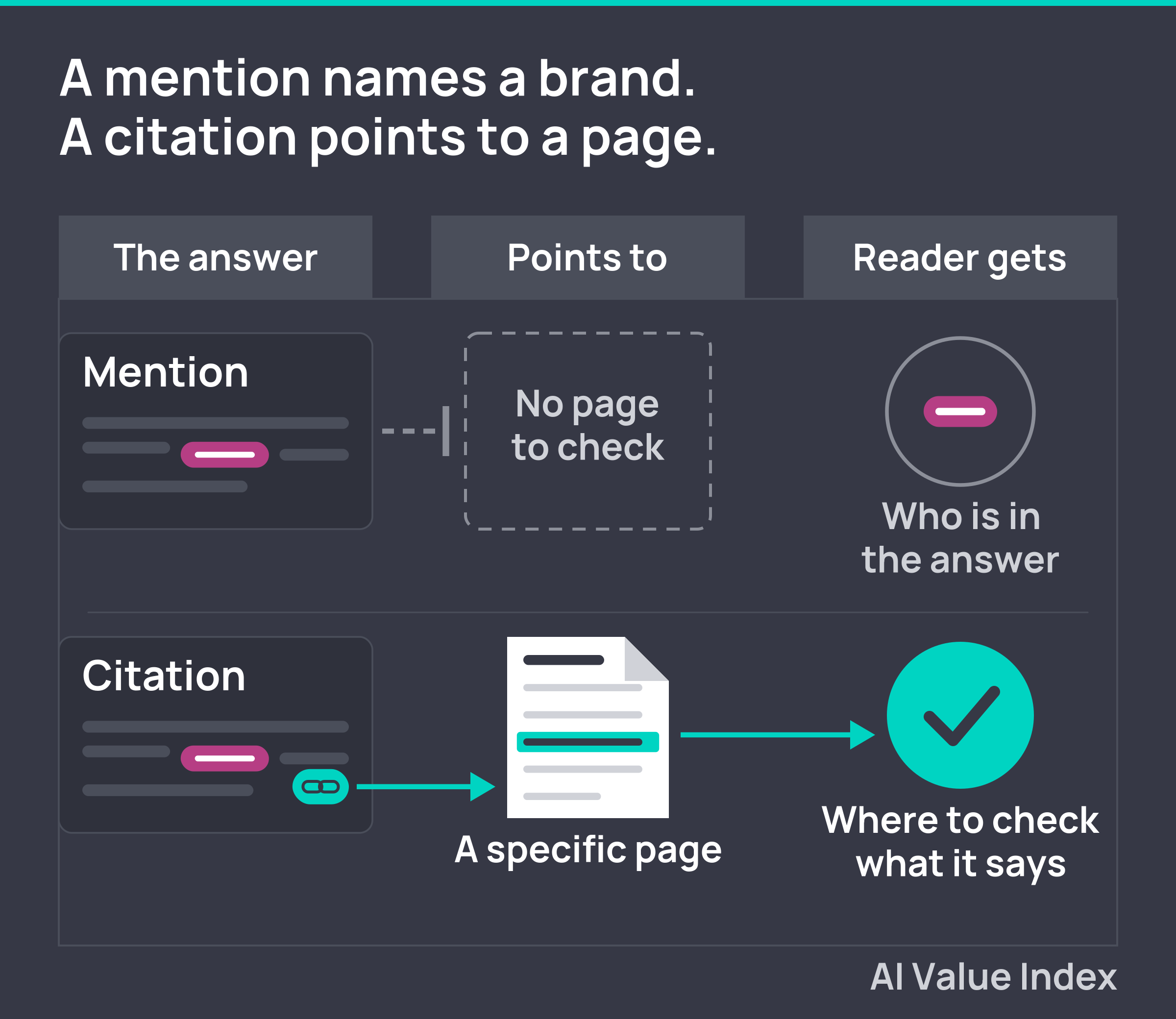
An AI search agency's argument: a mention tells you who is in an AI answer. A citation tells you where to check what it says.
The agency published three cases this month where AI tools cited its articles. Google AI Overview cited one on commodity trading software. Claude cited a case study about a U.S. general contractor whose team estimated it saved 14 to 16 hours a week. Perplexity cited an article that separated two programs at an herbal medicine school in Michigan. In each case, the cited page described a specific scenario, and the answer used it to explain something concrete.
The pattern is the point. A general claim gets a mention. A detailed, checkable scenario gets a citation.
Caution on the source. This is a paid press release from the firm that wrote the articles. The contractor is not named. The 14 to 16 hours a week saving is the contractor's own estimate, reported by the agency. None of this is measured proof, so this post records the trend and grades the evidence 1 of 5.
What to watch: whether business buyers start asking AI tools where a vendor's claims came from, and whether the sources AI tools cite hold up when someone checks them.
AI Value Index grade: 1 of 5. The cases come from a paid press release by the firm that wrote the cited articles, and the only figure is the contractor's own time-saving estimate.